
How to Use Orgonite Moulds: Pouring, Demoulding and Making Them Last
The Reality of Pouring Orgonite So, you have your mould sitting on the workbench and you are ready…


Binders are supplements some people add to a parasite cleanse to help capture what gets released during die-off, so it leaves through the gut instead of getting reabsorbed. Activated charcoal, bentonite clay, zeolite, and chlorella are the four that come up most, and all four are taken away from food and other supplements so they can do their job without soaking up nutrients along with everything else. Whether you actually need one is a separate question, and it depends on how your body handles the protocol you’re following.
People following a structured cleanse protocol often hit a rough patch partway through: headaches, fatigue, nausea, sometimes labelled a die-off or Herxheimer-type reaction. The idea behind a binder is mechanical rather than medicinal. Negatively charged substances like bentonite clay or activated charcoal trap positively charged toxins and byproducts in the gut, so they leave through stool instead of getting reabsorbed. That’s a supplement-category function, not a claim about curing or treating anything. Binders are a supportive step some people add to make a longer protocol more comfortable to get through.
Before adding any binder, most practitioner guidance starts with the same checklist: are you drinking enough water, are your bowels moving regularly, and are the pathways that carry waste out of the body actually open? A binder only works by riding out through stool, so if elimination is already sluggish, adding one on top of that doesn’t fix the underlying bottleneck. It just gives the binder nowhere useful to go. This is less about the binder and more about whether your body has somewhere for the captured material to end up. People who are constipated, dehydrated, or not getting enough fibre are usually pointed toward fixing that first, ideally with a practitioner’s input, before layering a binder into the routine.
Not everyone running a cleanse protocol adds a binder. It’s an optional layer people bring in specifically because of how rough a die-off period can feel, not because a protocol falls apart without it. If you’re tolerating a cleanse without much disruption, there’s no requirement to add one on top. If headaches, fatigue, or that generally off feeling are hitting hard, a binder is one of the things people reach for, usually alongside slowing the protocol down and drinking more water. It’s a personal decision, and one worth making with a practitioner if you’re not sure which way to go.
None of the following are Orgonise Africa products. They’re general supplement categories that show up across cleanse protocols, and it helps to understand what each one actually is before deciding whether to add one.
Activated charcoal is made by heating a carbon-rich material, often coconut shells or wood, until it develops a dense network of tiny pores. That structure gives it an enormous surface area, which is why it shows up across the supplement world as a broad-spectrum absorber. Material passes over the surface and sticks, then leaves the body along with everything else headed for the toilet. It’s usually the default choice because it doesn’t target anything specific, it just gives loose material somewhere to go.
Bentonite forms from weathered volcanic ash and swells when it meets water, taking on a strong negative charge in the process. That charge is the property people are relying on, since many of the substances a binder is meant to catch, including some heavy metals, carry a positive charge and are drawn to it. It’s usually mixed into water rather than swallowed as a capsule, partly because the swelling reaction is part of how it’s meant to work.
Zeolite is a mineral with a naturally occurring cage-like structure, sometimes compared to a honeycomb under a microscope. Those cages trap molecules small enough to fit inside them. It’s sold as a powder or a liquid suspension, and people who rotate binders through a protocol sometimes pick it because its structure works differently from a clay or a carbon-based binder.
Chlorella is a single-celled algae with an unusually tough cell wall, and that wall is the part most associated with binding in supplement use. The wall has to be broken, usually by cracking it mechanically during processing, before the contents become digestible, which is why manufacturers point to a “broken cell wall” step as important. Chlorella tends to be the binder people add later in a protocol, often alongside a heavy-metal-focused routine rather than on its own.
The advice that repeats across nearly every binder guide comes down to timing rather than the binder itself. Binders are generally taken on an empty stomach, well away from meals, and kept separate from other supplements and any medication, since a binder can’t tell the difference between something you want it to catch and something you don’t. Many people build the timing around their day, first thing in the morning or right before bed, so it doesn’t clash with meals or a medication schedule.
The parasite-cleanse category traces back to Dr. Hulda Clark’s protocol from the 1990s, which combined an herbal cleanse (black walnut hull, wormwood, clove) with a low-voltage device she called a zapper. Clark’s theory that a pulsed frequency could target parasites in the body has not been validated in clinical research, and outlets like Wikipedia and Science Feedback say as much. We’re not restating that as fact. We’re explaining why a zapper comes up at all in a conversation about binders and cleanse protocols.
Orgonise Africa’s Clark Zapper Essential sits in that same lineage, worn on the skin with an elastic strap. Some people running a binder-supported cleanse add it in as the device side of the routine, alongside whatever binder and herbal approach they’ve chosen. We’re not making a claim about what it does in measurable terms. What we can point to is 24 years of building zappers in this lineage and a review history of 713 entries going back to 2010, several from people ordering a replacement more than a decade after their first. That’s a continuity signal, not a promise of outcomes. Results vary person to person, and anyone trying a protocol like this is experimenting, not following a guaranteed formula.
Do I need a binder if I’m doing a parasite cleanse? Not everyone does. It’s an optional add-on some people include specifically to make die-off symptoms more manageable during a longer protocol, and whether to add one is usually a personal decision, ideally made with a practitioner’s input.
What’s the difference between activated charcoal and bentonite clay? Both trap toxins in the gut so they leave through stool instead of getting reabsorbed. Activated charcoal is a broad-spectrum absorber, while bentonite clay is a swelling mineral clay particularly associated with binding heavy metals and mycotoxins. Which one people pick often comes down to form: capsule versus a powder mixed into water.
Are there any downsides to taking a binder? Some people notice constipation or a change in bowel habits when they start one, especially with clay-based binders, since the same swelling action that traps toxins can also slow things down if you’re not drinking enough water. Binders aren’t selective either, so taking one too close to a meal risks pulling in nutrients along with everything else, which is the main reason the separation from food matters.
Can I use a zapper without taking any binders? Yes. A zapper and a binder are two separate, optional pieces of a cleanse routine, not a package deal. Some people use one, the other, both, or neither, depending on the protocol they’re following.
How long do people typically stay on a binder during a cleanse? This varies by protocol and is really a question for whoever is guiding your specific routine. General binder-education sources describe cycles ranging from a few weeks to a few months, always taken apart from food and other supplements.
If the zapper side of this is what you were actually trying to find, the Clark Zapper Essential page walks through the construction, the Hulda Clark lineage it’s built on, and 24 years of documented history, with no outcome promises, just the facts of what it is and where it comes from.
Ready to start your cleanse?
Shop Orgonise Africa’s Parasite Cleanse Range →

Ready to experience orgonite for yourself?
Shop All Products → The Reality of Pouring Orgonite So, you have your mould sitting on the workbench and you are ready…
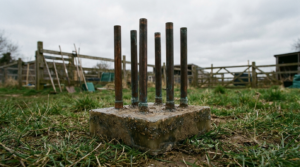
The Sticker Shock: Why do prices vary so wildly? If you have been looking for a Cloudbuster online,…
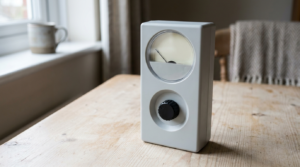
What does the TriField TF2 actually measure? I've lost count of how many times I've watched someone switch…
Georg's expedition reports, orgonite guides and community news — straight to your inbox.
Unsubscribe anytime.